
Non-Woven Insulated Food Bag Making Machine
As a China-based bag making machine manufacturer, ZHENGWEI develops equipment that forms laminated non-woven rolls into three-dimensional insulated food carrier bags. We review your material construction, finished bag size and handle requirements before recommending a production configuration.
Discuss Your Insulated Bag ProductionNon-Woven Insulated Food Bag Applications
Explore practical carrier-bag structures for takeaway meals, bakery boxes, beverages and chilled retail packaging.


Non-Woven Insulated Meal Carrier Bags
Flat bottoms and side gussets accommodate combinations of boxed takeaway meals.


Non-Woven Insulated Cake Bags
Square-base carriers help keep complete cake boxes level during handling.


Non-Woven Insulated Pizza Carry Bags
Wide, stable bag bases accommodate single or stacked square pizza cartons.


Non-Woven Insulated Beverage Bags
Balanced handles and suitable base dimensions help carry upright cup trays.


Non-Woven Grocery Cooler Bags
Reusable insulated totes carry mixed dairy and packaged chilled groceries.


Non-Woven Frozen Food Carry Bags
Thermal carriers can be evaluated for packaged frozen goods and optional ice packs.
Product Categories for Non-Woven Insulated Food Bag Production
Compare equipment for laminated insulated carriers, wide-gusset thermal bags and general three-dimensional non-woven formats.

ZW-2024 Non-Woven Cooler and Food Delivery Bag Making Machine
For insulated food carriers, cooler bags and three-dimensional takeaway bags.
Get a Quote
ZW-A8-S350 Non-Woven Thermal Bag Making Machine
For selected laminated thermal bags with wider side gussets.
Get a Quote
ZW-A8 Non-Woven Box Bag Making Machine
For general three-dimensional non-woven box bags.
Get a QuoteCompare Published Machine Specifications
| Specification | ZW-2024 | ZW-A8-S350 | ZW-A8 |
|---|---|---|---|
| Published speed | 60–120 bags/min | 20–80 bags/min, size-dependent | 60–90 bags/min |
| Bag width × gusset × height | 110–550 × 70–230 × 150–450 mm | 110–550 × 80–350 × 200–500 mm | 110–550 × 70–230 × 150–450 mm |
| Published material range | 55–140 g/m² | 100–140 g/m²; 350 mm gusset guidance applies to stiff material | 55–140 g/m² |
| Material descriptions | Laminated non-woven, bare fabric and coated composites | PP non-woven, BOPP-laminated and metallized-film-laminated non-woven | Non-woven laminates and PP |
| Maximum feeding width | 1160 mm | 1450 mm | 1160 mm |
| Handle length | 330–550 mm | 400–650 mm (width 25–30 mm) | 330–550 mm |
| Power supply / rated power | 380 V three-phase, 50/60 Hz / 60 kW | 380 V / approximately 80 kW | 380 V three-phase, 50/60 Hz / 60 kW |
| Published installation dimensions | 8500 × 5700 × 2500 mm | 9600 × 7300 × 2700 mm | 8500 × 5700 × 2500 mm |
Production Challenges and Solutions for Non-Woven Insulated Bags
From roll feeding to handle attachment, each process requires suitable materials and machine configuration.

Control Laminated Non-Woven Feeding
Off-track laminate rolls can shift subsequent folding positions.
Edge-guiding controls support roll alignment; inspect fold placement on output samples.

Form Three-Dimensional Non-Woven Bags
Bottom panels and gussets require coordinated station movement.
Servo synchronization and mould positioning are checked against finished bag geometry.

Match Ultrasonic Sealing to Laminated Materials
Excessive or insufficient bonding affects seam appearance and integrity.
Review ultrasonic settings using actual bottom and side-seam samples.

Align Printed Insulated Non-Woven Bag Panels
Print-to-fold mismatch can interrupt the intended finished design.
Color-mark tracking and registration systems help align preprinted material.
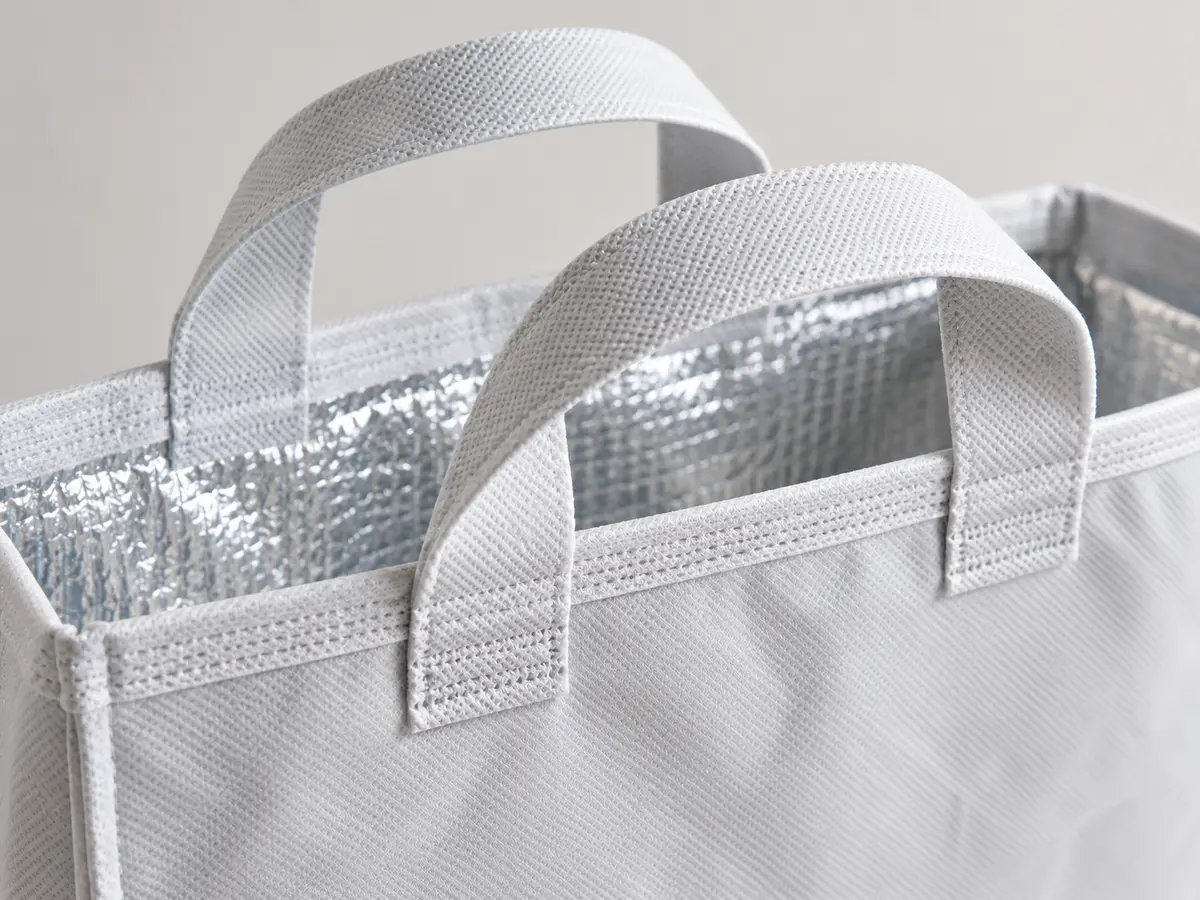
Integrate Soft Loop Handle Processing
Repeated off-line transfers complicate handle preparation and attachment.
Available integrated handle steps depend on the selected line and bag design.

Manage Insulated Bag Size Changeovers
Changing bag dimensions can require mould and folding adjustments.
Review format components, operator tasks and sample checks for each changeover.
ZHENGWEI Non-Woven Bag Making Machine Factory
Machining, machine assembly and production testing connect engineering decisions with factory-built equipment.


ZHENGWEI's published manufacturing-base area. For a specific laminated non-woven production project, request the relevant machine trial video, tested material details and finished bag samples rather than relying on facility size alone.
Discuss Your Non-Woven Insulated Food Bag Production Project
Send your finished bag, laminated substrate or drawing for a configuration review and cooler bag machine quotation.
Information That Helps Us Review Your Project
- Company, business email and destination country
- Finished bag dimensions: width, gusset and height
- Laminate layer description, grammage and roll format
- Handle, closure and printing requirements
- Reference photos, drawings and requested output


Request a Machine Configuration Review
Loading inquiry form...
Have a bag sample or material file? Send it directly by email, or use the contact page if the form is unavailable.
Non-Woven Insulated Food Bag Making Machine FAQs
Key technical limits, project requirements and commercial questions for packaging equipment buyers.
Can an insulated bag making machine laminate materials inline?
Inline lamination and bag forming are separate manufacturing functions. The described equipment uses roll-fed materials, while a built-in laminating process has not been confirmed. Provide a sample or layer specification and ask whether the substrate must be laminated, printed and slit before entering the bag forming line. Material thickness and roll-core requirements must also be checked.
Can one machine produce insulated cooler bags and regular non-woven bags?
That depends on both finished structures and the actual roll material. Bag dimensions, gusset layout, handle construction and sealing conditions may differ even when both products use PP non-woven substrates. ZHENGWEI should compare samples, confirm machine modules and identify format parts or setup changes before stating that both products can run on one configuration.
Can a non-woven insulated bag making machine add zippers or flaps automatically?
Some machine families list optional bag-mouth features, but this does not establish automatic zip or flap production for every insulated laminate. The specific closure, material thickness and bag-mouth geometry need engineering review. Ask which operations are integrated in the quoted line, which require optional units and which must be performed off-line.
Does the bag making machine determine heat or cold retention time?
No guaranteed retention period can be inferred from a bag machine's advertised speed or forming capability. Thermal performance also depends on material layers, closures, filled contents, ambient temperature and the method used to test the finished carrier. Request an agreed thermal test protocol before making temperature or hours-of-performance claims about the bag.
What is the minimum order quantity for an insulated bag making machine?
A verified minimum order quantity for these configurations has not been published in the supplied machine data. MOQ, tooling inclusions, optional modules, spare parts, shipment scope and payment terms should be confirmed in the formal quotation. For a custom production project, send the bag drawing and laminated material details so the quotation can define its actual scope.
Who confirms food-contact compliance for the finished bag?
Machine conformity documents and food-contact material compliance are different matters. The finished bag's material declarations, intended food-contact conditions, and any necessary migration or other tests must be reviewed for its target market. The bag producer and its material suppliers should establish the applicable requirements; confirm separately which documents ZHENGWEI can supply for the equipment.
What is the lead time for a non-woven insulated bag making machine?
ZHENGWEI publishes approximately 30 days as a standard machine production lead time. The actual schedule for a particular non-woven insulated bag line depends on configuration, available production capacity, project approval and any special tooling or modules. Confirm the order-start milestone, inspection schedule and custom-machine delivery period in the sales agreement.
What installation and after-sales support is available?
Published services include on-site installation and commissioning, typically taking 7–10 days, operator training, a 12-month machine warranty, remote troubleshooting and spare-parts support. The technical-response commitment is within 24 hours; it is not a guarantee of repair within that time. Confirm travel expenses, consumable exclusions, warranty start date and local support arrangements before ordering.
